
Move Closer to Family Without Sacrificing Independence
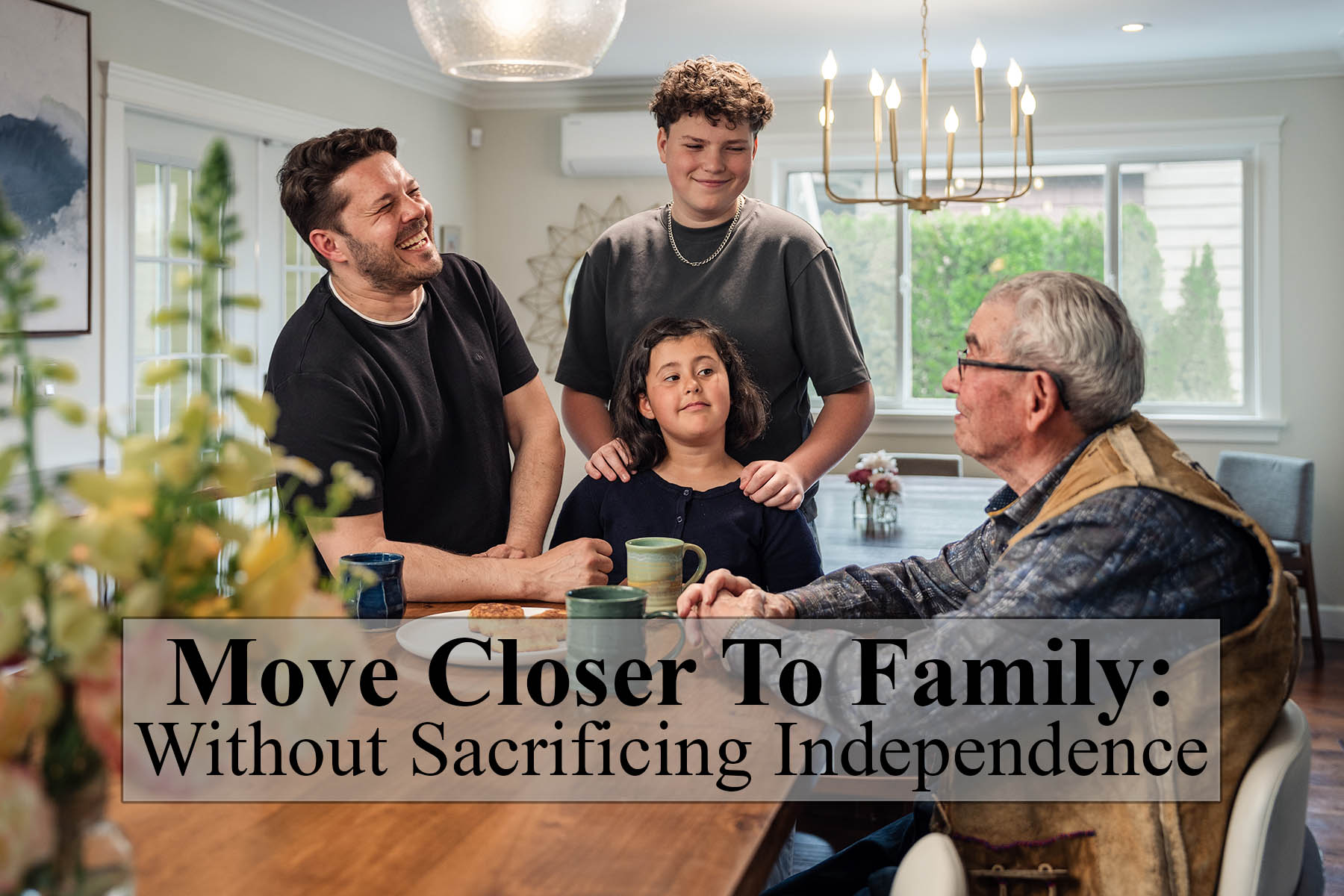
How to Move Closer to Family Without Sacrificing Your Independence
For mid-career adults relocating with a partner, kids, or aging parents in mind, family relocation decisions often come with a hard pull in two directions. The emotional impact of moving can feel like relief, more dinners together, easier help in a pinch, until the real-world friction shows up around balancing family closeness and independence. Family support networks can quickly turn into unspoken expectations, and multigenerational living challenges can surface even without sharing a roof. Clear expectations make it possible to build closeness that still leaves room to breathe.
Create a Move Plan That Protects Your Independence
This process helps you pick housing close enough for meaningful support while keeping day-to-day life in your control. It matters because most independence problems do not come from distance, they come from vague expectations and rushed decisions.
1. Define your “close, not crowded” target
Start by writing what “near” actually means for your life: a time range (like 15 to 30 minutes away), how often you want to visit, and what kinds of help you are truly offering. Add two non-negotiables such as “we host on Sundays only” or “no unplanned drop-ins,” so your housing search supports your lifestyle.
2. Choose a housing option that fits your budget and your exit plan
Compare renting, buying, and multi-unit setups through the lens of flexibility: how easy it is to move again if the fit is wrong. Keep your numbers honest, since the Federal Reserve found homeownership rates varied substantially by income, which is a good reminder to match the dream to the budget.
3. Vet the neighborhood like you’re already living there
Do two visits: one weekday evening and one weekend morning, then note noise, traffic, parking, and how it feels to run errands. Check practical resources that reduce family dependency such as grocery options, childcare, parks, medical care, and activities your household can do without anyone else’s help.
4. Set boundaries in writing before you sign anything
Create a simple “how we’ll stay connected” agreement with your partner first, then share it with family in plain language. Include visit rhythms, childcare rules, privacy basics, and a reset plan (for example, a monthly check-in) so small frustrations do not pile up.
5. Confirm the move-in setup that keeps life self-sufficient
Before move-in, line up your own essentials: schools or routines for kids, backup childcare, local friends, and a short list of service providers (doctor, dentist, mechanic). The goal is to be close by choice, not close by need.
Plan a Career Reset That Fits Your New Zip Code
Once your move plan and boundaries are in place, it’s easier to look at work with fresh eyes, and decide what kind of career actually supports the life you’re building near family. A relocation can be the perfect moment for a career reset, because it naturally pushes you to line up professional goals with personal priorities. Instead of grabbing the first job that fits your resume, aim for opportunities that protect flexibility, create room to grow, and still let you keep your independence, so your work supports your new routine rather than competing with it. If you want help exploring what’s realistic in your area and where you might be most adaptable, the career institute tools and services can be a useful place to start. This matters even more right now: studies show that as burnout and dissatisfaction rise, many employers are leaning on external hiring rather than developing the talent they already have, widening skills gaps and limiting growth for both workers and organizations. In other words, waiting for a perfect internal path may not pay off, but being open to a reset can.
Habits That Keep You Close and Self-Directed
These habits turn good intentions into a steady routine, so you stay present with family without sliding into constant availability. Think of them like home maintenance: a few simple check-ins prevent bigger repairs later.
Weekly Boundary Review
● What it is: Re-read your top three boundaries and adjust one line of wording.
● How often: Weekly
● Why it helps: It keeps expectations clear as schedules and needs change.
Two-Window Contact Rule
● What it is: Choose two daily windows for calls and texts, then go offline.
● How often: Daily
● Why it helps: You feel reachable without losing focus or downtime.
Five-to-One Kindness Check
● What it is: Aim for 5 positive interactions before you address one friction point.
● How often: Daily
● Why it helps: It keeps closeness warm even when you need to say no.
Privacy Settings Sweep
● What it is: Review app permissions, shared calendars, and smart speakers for concerns of privacy.
● How often: Monthly
● Why it helps: It protects your personal space while staying connected.
Solo Anchor Activity
● What it is: Keep one nonnegotiable hobby, class, or workout that is just yours.
● How often: Weekly
● Why it helps: It reinforces identity beyond family roles.
Questions People Ask Before Moving Closer to Family
Q: How do I move closer without becoming the default helper?
A: Put your “yes” on the calendar first: work hours, workouts, downtime, and travel days. Then
offer predictable help slots, like Tuesdays 6 to 8, so support is real but contained. If someone
pushes, repeat one sentence: “I can help during my set time, not on-call.”
Q: What can I say when guilt makes me agree too fast?
A: Use a pause phrase you can live with: “Let me check my schedule and get back to you by
tonight.” That small delay protects you from reflex “yes” responses and gives you space to
choose. If it’s a no, pair it with one alternative you can do.
Q: How should we handle different expectations about visits and keys?
A: Decide the big three early: drop-in rules, spare-key access, and overnight expectations.
Write them in a shared note so you are not renegotiating every holiday. Keep it neutral, like
house rules, not a verdict on anyone.
Q: When I’m switching jobs, how do I avoid stalling my career after relocating?
A: Plan a 90-day skills sprint: pick one role target, one course, and two networking
conversations per week. The World Economic Forum notes skill sets will be transformed for
many workers in the coming years, so steady upskilling is a safety rail, not a luxury.
Q: How do I make time for my family and still protect my own life?
A: Treat your week like a simple system: block family time, work time, and personal time before
requests arrive. The idea behind organizing and prioritizing daily tasks applies even if you are
not a parent: if it is not scheduled, it gets crowded out.
Balancing Family Proximity With Independence and Career Momentum
Moving closer to family often pulls in two directions at once: the benefits of family proximity and the need to protect your independence. The steadier path is choosing closeness on purpose, making mindful boundary setting part of the plan, not an afterthought, so support doesn’t quietly turn into obligation. When that’s in place, positive relocation outcomes show up faster: more connection, more calm, and real room for personal growth after moving, including career development near family. Closeness works best when it’s chosen, and bounded, on purpose.
Author: Suzie Wilson